The messaging on your phone today started here
RCS — the chat system built into Android, and into the iPhone since 2024 — is the GSMA’s answer to a question the association first put to the industry as Personal IM in 2006. Followap built the platform Personal IM ran on, and demonstrated the interconnect to the operators at a GSMA meeting in Barcelona.
When you send a message from an Android phone today and it goes as a chat rather than an SMS — typing indicators, read receipts, the contact’s availability, all carried by the mobile network and addressed to a phone number rather than an account — that is RCS, Rich Communication Services. Apple shipped it in iOS 18 in 2024, which makes it, finally, the interoperable messaging layer the mobile industry set out to build.
Set out to build in 2006. Under a different name, in the same trade association, with several of the same operators — and running, in a good number of those networks, on Followap’s platform.
2006 — 2024
One programme, two names, eighteen years
Everything up to 2008 is quoted from the press archive on this site. What follows it is the public record of the GSMA’s own work.
Feb 2006
Barcelona: two networks agree to interoperate
At 3GSM in Barcelona, Orange and Vodafone commit to linking their messaging communities “under the open standard interoperability principles, established by the GSM Association”. Followap supplies the gateway — and at a GSMA meeting in the city, with the major operators present, Allen Scott demonstrates it working.
Read the releaseOct 2006
The GSMA backs interoperable mobile IM
When Mobinil launched its IM service on Followap’s platform, Alex Sinclair, CTO of the GSMA, added the association’s support: it “is working with the industry to ensure their technology is fully interoperable so that users can exchange messages across networks”.
Read the releaseNov 2006
The programme gets a name: Personal IM
The NeuStar acquisition release states it plainly — the GSM Association “has identified Personal IM as a pan-industry, mobile operator-hosted, messaging service”, an upgrade to text and multimedia messaging, with a coordinated industry launch set for the first quarter of 2007.
Read the releaseNov 2007
Personal IM goes live
The GSMA announces Personal IM services live in Asia. The operators it names include VimpelCom, Turkcell, Celcom and China Mobile — and three of those four were running Followap’s platform.
VimpelCom, May 20072007
RCS is founded
A new initiative — Rich Communication Suite — is founded by AT&T, France Telecom/Orange, Telecom Italia, Telefónica, TeliaSonera, Ericsson, Nokia Siemens Networks, Sony Ericsson, Nokia and Samsung. It builds on the path Vodafone and Orange opened in 2006, when they agreed to link their messaging communities, and Vodafone went on to become one of RCS’s leading champions. Same forum, same goal.
Feb 2008
The GSMA takes RCS in
RCS moves into the GSMA’s own work programme, the association that had been running Personal IM since 2006.
Sep 2008
The first specification
RCS is defined as interoperable enriched communication: conversational messaging, in-call multimedia sharing, and “an enhanced phonebook with presence information”. Followap had been shipping that phonebook since 2004.
PEC, March 2004Nov 2008
Still called Personal IM in the field
Celcom sets out to interconnect every mobile network in Malaysia on the Interconnect Platform and Hub — “this supports the GSMA’s Personal IM initiative for operators to build on the success of SMS and create one interconnected global IM community”.
2016
Universal Profile
The GSMA publishes a single RCS specification for the whole industry, ending years of incompatible operator variants. Google, having bought Jibe Mobile the year before, makes it the messaging system on Android.
2024
It reaches the iPhone
Apple ships RCS in iOS 18. Presence and chat in your address book, carried by the network, addressed by the number you already have, working across carriers — on effectively every phone sold.
← Scroll the timeline →
Barcelona, 2006
Demonstrated to the operators, in the room
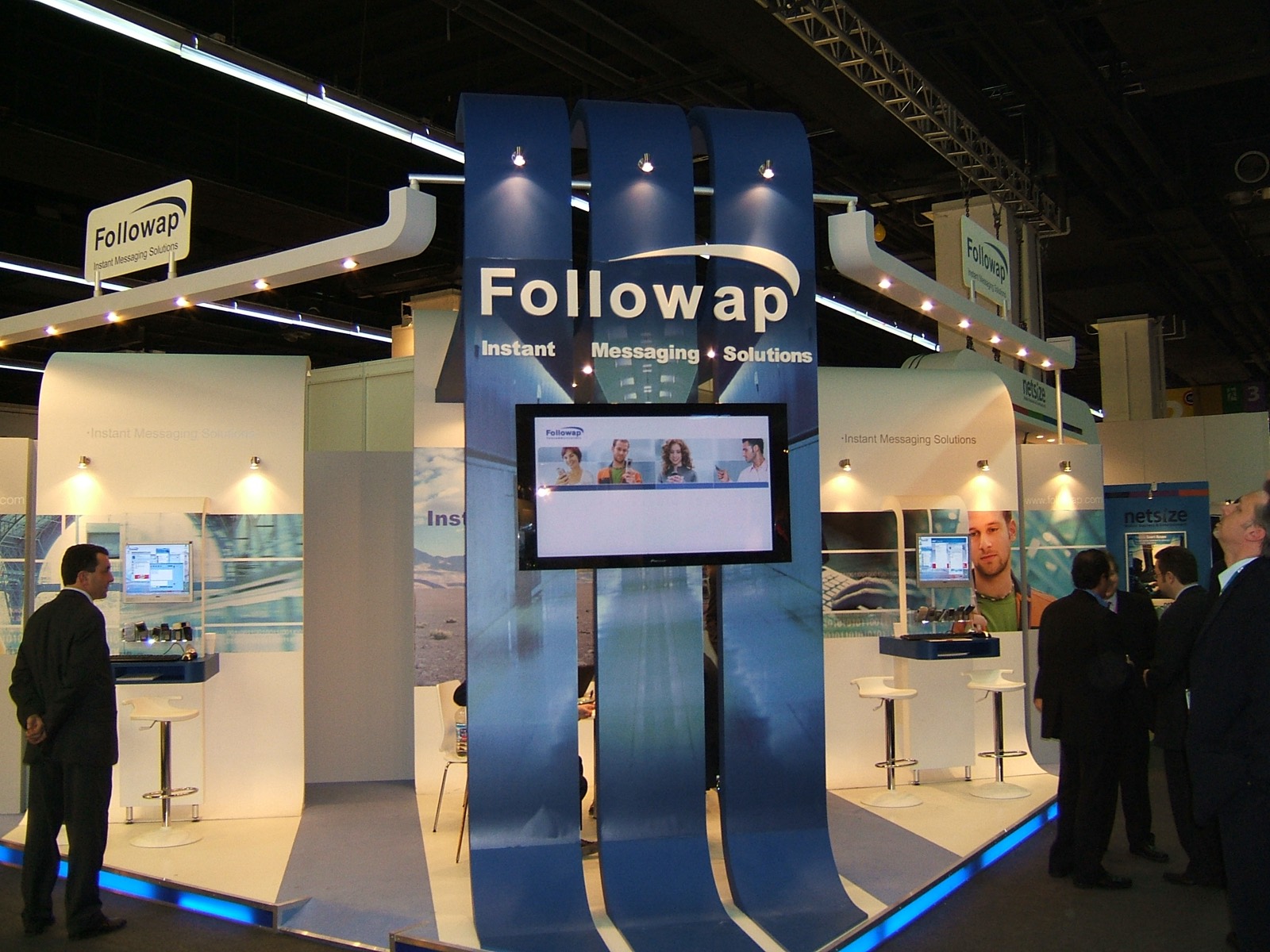
Barcelona in February 2006 was the week Orange and Vodafone announced they would link their messaging communities using the Interconnect Platform of Followap. In a GSMA meeting held inside the same exhibition halls with the major mobile operators present, Followap demonstrated the thing itself: mobile instant messages crossing between networks, addressed by phone number. The operators who would have to agree to Personal IM watched it work before they signed up to it.
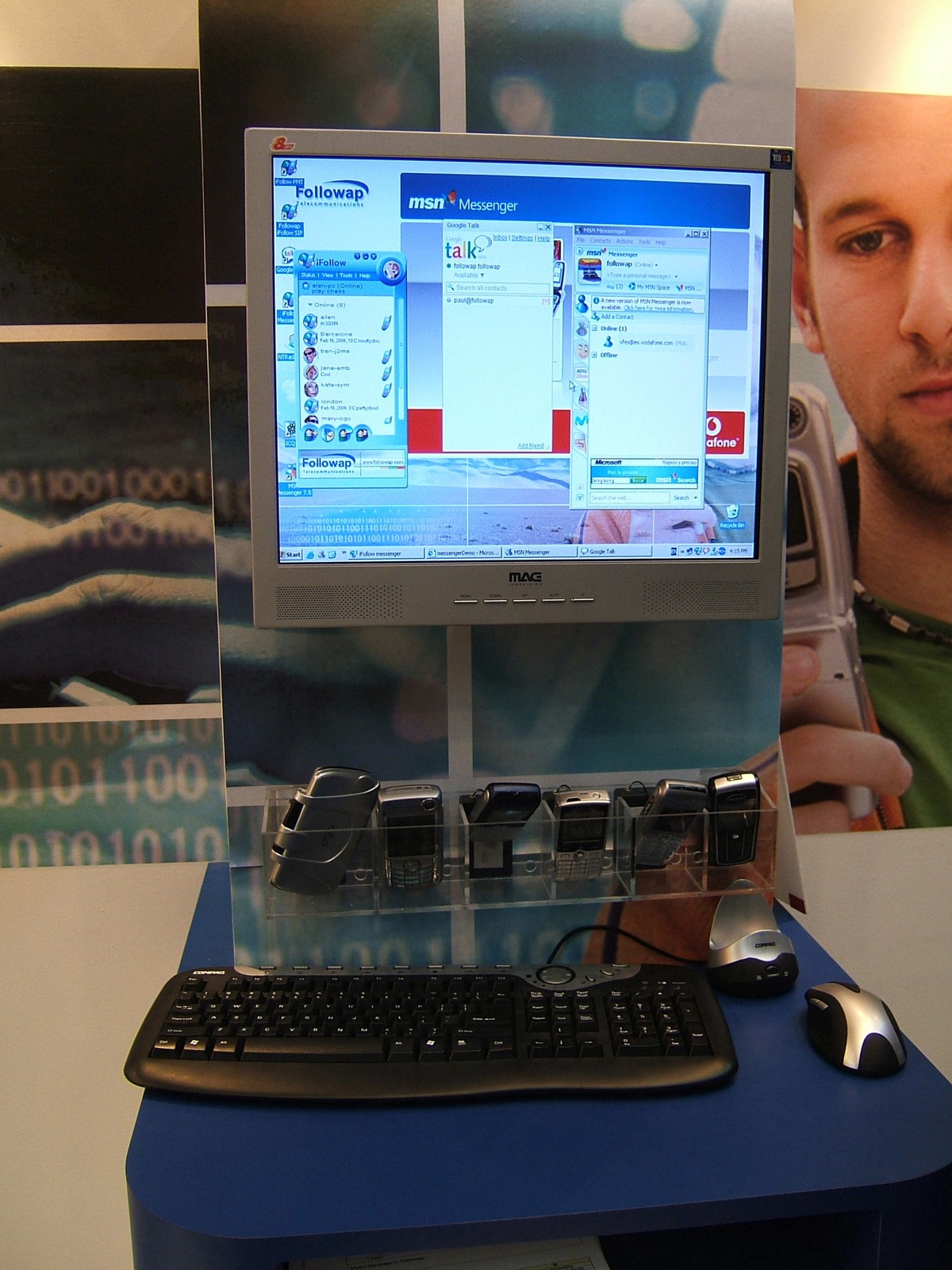
On the screen
One buddy list, four kinds of client, three networks
- A contact called allen, on a handset, with the status “At 3GSM”.
- Contacts suffixed -j2me, -sym, -emb and -pc in one community — the same messenger reached from Java and Symbian handsets, from an embedded client, and from a PC.
- Presence carrying real information: two contacts publishing the local weather for 16 February 2006 in Barcelona and London, which is what dates the photograph.
- MSN Messenger signed in beside it, its one online contact a Vodafone Spain mobile address.
- Google Talk open alongside, signed in as followap.
A phone, a PC and two rival internet messengers in one contact list, in February 2006. That is the argument the GSMA meeting was about, running on a desk.


Barcelona, February 2006
A very good week for Followap
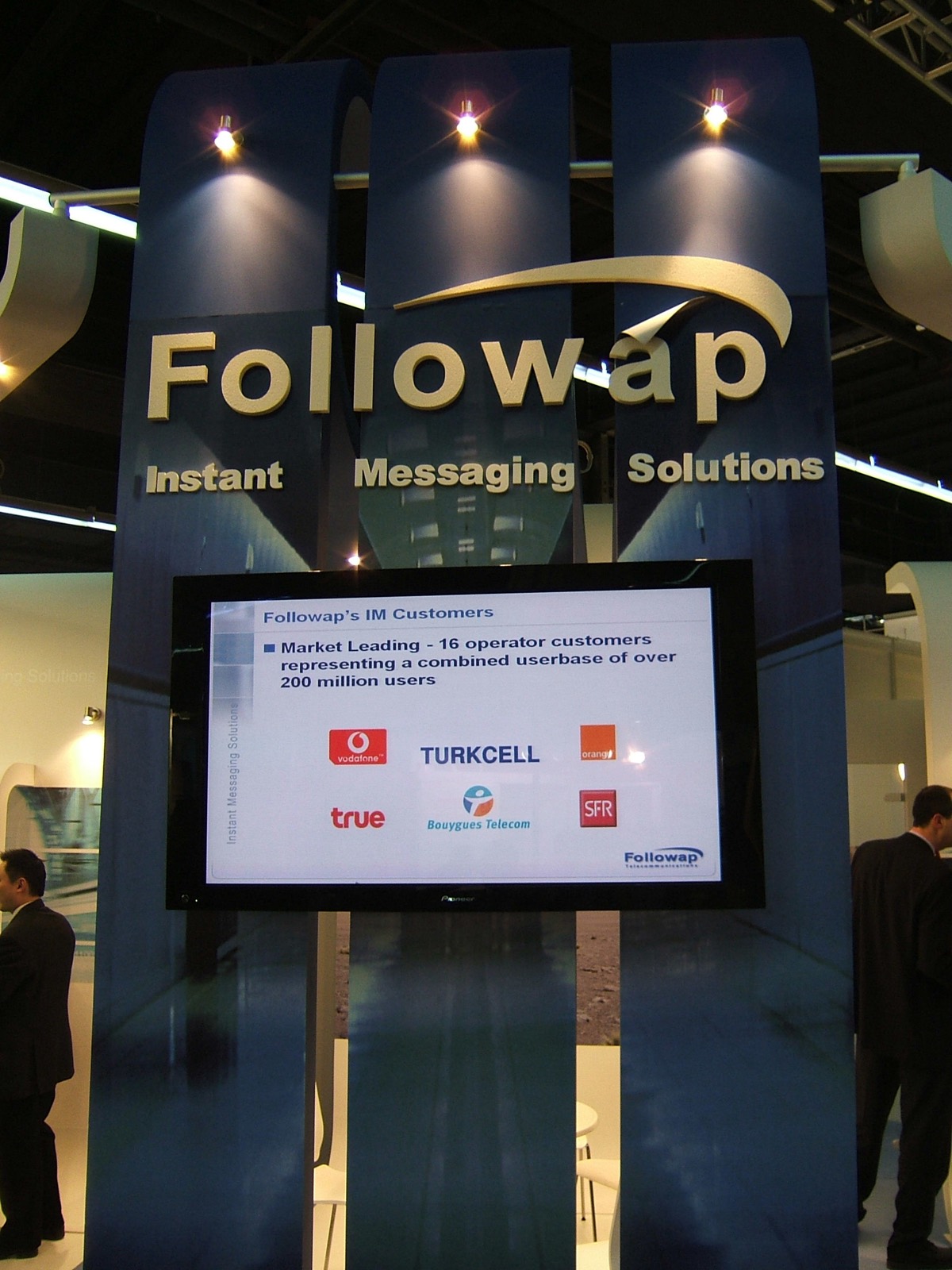
Allen Scott ran the demonstration very successfully.
Said at the time
What the archive says, in its own words
The GSMA worked with Followap for years, under the name the association used at the time. Its own CTO said so in Followap’s announcements.
13 February 2006
Orange & Vodafone, 3GSM Barcelona
“Working under the open standard interoperability principles, established by the GSM Association, Orange and Vodafone customers will be able to send and receive Instant Messages to friends and family seamlessly across each others’ mobile networks.”
13 February 2006
Sanjiv Ahuja, CEO, Orange Group
“We also fully support the wider work that the GSMA is undertaking on IP interworking.”
17 October 2006
Alex Sinclair, CTO of the GSMA, in Followap’s Mobinil release
“The GSMA is working with the industry to ensure their technology is fully interoperable so that users can exchange messages across networks — a factor that has been instrumental in the enormous success of text messaging.”
27 November 2006
NeuStar, on acquiring Followap
“The GSM Association has identified Personal IM as a pan-industry, mobile operator-hosted, messaging service that is a critical complement and an upgrade to existing mobile messaging services, including text and multimedia messaging and telephone-number based presence.”
10 May 2007
VimpelCom (Beeline), Russia
“Supporting the GSMA’s Personal IM initiative, VimpelCom will join leading operators worldwide who have committed to enabling subscribers to keep connected through presence-enabled mobile messaging.”
18 November 2008
Celcom, Malaysia
“This supports the GSMA’s Personal IM initiative for operators to build on the success of SMS and create one interconnected global IM community.”
Same product, different decade
RCS’s founding feature list, and when Followap shipped it
When the GSMA published the first RCS specification in September 2008, it described interoperable enriched communication: conversational messaging, in-call multimedia sharing, and an enhanced phonebook carrying presence. Line the rest of it up against the archive.
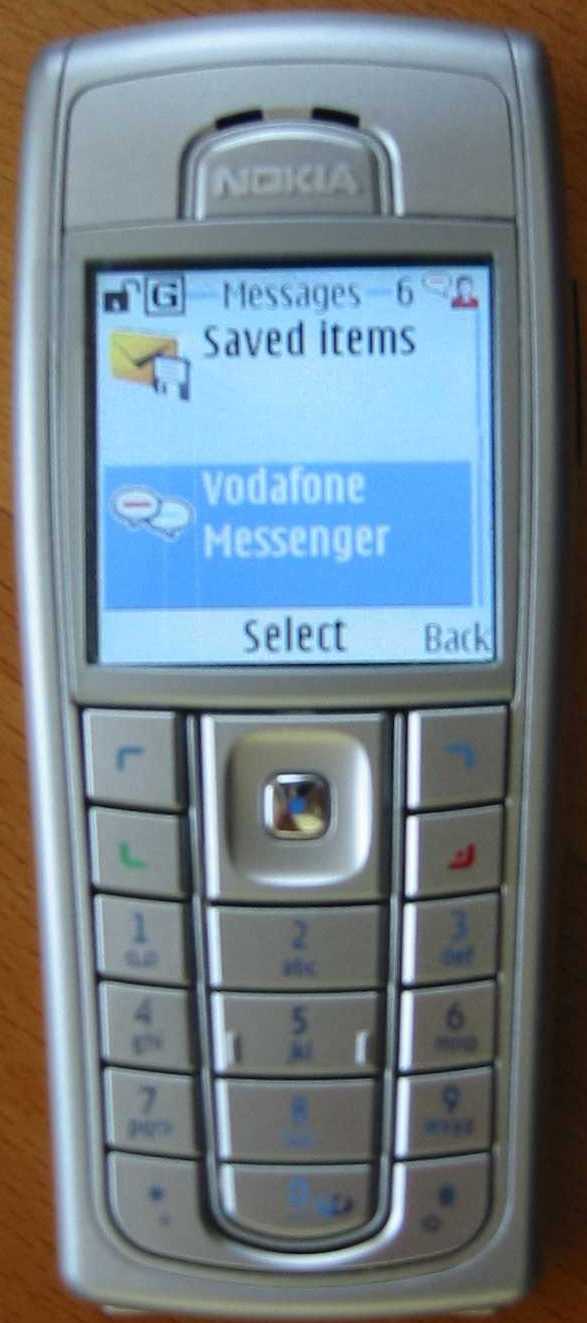
What it looked like to a subscriber
In the Messages menu, not in an app store
No download, no account, no screen name. The messenger was part of the phone’s own messaging, next to the inbox, and it addressed people by their number.
Followap supplied both halves of it. The messenger is an application the company wrote, carrying Vodafone’s brand and built into the handset — and it was already in the menu in March 2005. The Interconnect Platform that carried it beyond Vodafone’s own network followed in February 2006, “identifying every Vodafone Messenger customer by their phone number” — by which point Vodafone’s own annual report had the service running in eleven countries.
People used it. In June 2008 Vodafone Portugal alone announced that Messenger had passed 300 million messages, running at about two million a day, at three euros a month after a free first month. One country, out of the eleven running the service.
That placement is the whole argument. RCS did not invent chat in the messaging app; it took eighteen years to make this ordinary.
The Interconnect Platform releaseRCS 2008
An enhanced phonebook with presence information
Presence Enhanced Contacts, demonstrated in March 2004: “PEC transforms the handset’s phonebook into a dynamic contact list, displaying the availability status of each contact inside the phonebook.”
PEC, March 2004RCS 2008
Conversational messaging
The IMSC — an operator-branded, operator-billed messaging community, running commercially since the Eircell launch in December 2000.
The Eircell launchRCS 2008
Addressed by your phone number
MSISDN as the identity, never a screen name — the decision that made the address book work as a buddy list and made federation between networks conceivable at all.
How the platform workedRCS 2008
Interoperable between operators
The Interconnect Platform, live for Vodafone from February 2006 and aimed at a whole country with Celcom in 2008 — email-style federation for consumer messaging.
The Interconnect PlatformRCS 2008
Capability discovery
In the Motorola IMS work of February 2004, presence already told you “if their device is capable” of a session before you tried to start one.
The Motorola testsRCS 2008
Carried over IMS
The Presence Platform was re-engineered as a SIP application server over 3GPP IMS core networks and released in June 2005, alongside the Series C.
The Series C releaseThe GSM Association has identified Personal IM as a pan-industry, mobile operator-hosted, messaging service that is a critical complement and an upgrade to existing mobile messaging services, including text and multimedia messaging and telephone-number based presence.
Same programme, new name
Personal IM became RCS
One goal, one forum, the same operators, and a feature set that is Personal IM plus in-call media sharing. Followap was inside that programme from the beginning — and when the GSMA announced Personal IM live in Asia in November 2007, three of the four operators it named were running Followap’s platform.
The GSMA renamed the work rather than announcing a succession, so you will not find a document that says “Personal IM is now called RCS”. You will find the same association, the same operators and the same product description, five years apart.
Instant Messaging. Delivered.
What a phone does by default is what Followap sold to Vodafone in 2001
Presence in your address book, chat carried by the network, addressed by the number you already have, working across every carrier. It took roughly eighteen years and a different name.